
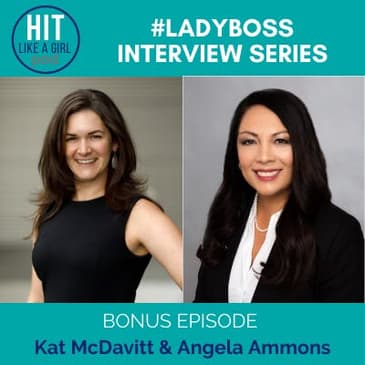
Kat McDavitt & Angela Ammons

Episode Notes

On this special in-between-season episode of HIT Like a Girl pod, we host a conversation between two bonafide health IT pros: Kat McDavitt, Principal Advisor & Public Affairs Practice Head at Innsena Communications and Angela Ammons, CEO of Clinch Memorial Hospital.

Angela opens up about how not having a traditional educational background has influenced her work as a healthcare and hospital executive in rural Georgia.

Stay connected to Kat McDavitt:

Stay connected to Angela Ammons:

HIT Like a Girl podcast is supported in part by listeners like you. Become a member of our private Slack community to get bonus content and take these conversations further at https://hitlikeagirlpod.com/community.

Video

Transcription

Kat McDavitt: Hi, I'm Kat McDavitt and I  have a   very special lady boss guests here today, Angela Ammons. She's the CEO of Clinch Memorial hospital in South Georgia.

 I met Angela through a Clubhouse encounter. For those of you who don't know Clubhouse -it is a new social media app, that has  taken the world by storm. And I met her because  was speaking  to a gentleman who mentioned Angela and the great work that she's doing in Georgia with her hospital and some of the amazing accomplishments that she has. So he hooked us up. I don't think we had any expectations, but I was blown away by her background.

And I'm excited to talk to her today. So Angela, I'm going to let you introduce yourself and tell us a little bit about clinch Memorial hospital.

Angela Ammons: Hi, thank you so much for having me Kat - I mean, I loved you since the first time I talked to you

I am the CEO of Clinch Memorial and have been here almost four years - gosh, it just seems like yesterday. We are a 25 bed critical access hospital located in a rural part of Georgia. And so we provide a lot of care for those who, otherwise, have to travel 45 minutes away.

 My background is a registered nurse. So I have nursed for several years before I accepted this role. And I've worked for various healthcare systems, HCA,  Memorials, Tila, and larger hospitals on the coast of Georgia. So I've got a pretty good background in healthcare and had been on the bottom end. And now here. Clinch Memorial is a phenomenal hospital and when I accepted the role, I knew that it was going to be a challenge.

Georgia hospitals had faced so many closures over the last several years. And I knew that we were handling closure as well. And I remember being advised not to take the role because people were afraid they'll use me as a scapegoat, and that would be the end of my career.

But many people, how many women in this industry, you get a chance to become a hospital administrator? So I took the challenge and I'm wanting to prove to everyone that I could do it.

Day one, like by 10 o'clock, I was trying to take a goody powder with the biggest cup of coffee that I possibly could because I was like, I am on the TV show, pumped. This really cannot be happening to me. The things that I'm hearing, the things that I am seeing - it's just a culture of people who really had not had a lot of, I guess, current oversight. Hummer Bill's a small town, it was a small hospital kind of off the radar.  And I think I was the first CEO in several years ahead, any healthcare background. So it was hard for some to handle. I remember being introduced by the interim CEO that day. And there are some people that refuse to meet me and  I just can't believe it.

I don't care if you're a Walmart greeter. I don't care who you are. Everybody deserves a "hello" or at least a "how are you", "welcome to the club" or whatever. But I just knew - I was like, "Oh, my lord; what did I step into? What is going on here?"

Kat McDavitt: You are in for a challenge! I love that you were advised against it, that all sides were reporting elsewhere and you said, "no, I'm going to lean into this and I'm going to do it and I'm going to make it awesome."

Angela Ammons: Yeah. One of the things that I do, and a lot of people think it's a sign of failure, weaknesses is I admit what I don't know. Or I admit what I am uncomfortable with knowing. So before I took the job or started the job, I researched high-performing CEOs and healthcare CEOs.

And I found one by the name of Robin Routt, who has done a tremendous job at Miller County Hospital. And after I had rounded through the hospital and seen everything I needed to see, I picked the phone up and I cold called her. And through the grace of the Lord, she answered the phone and said, "Robin, you don't know who I am but I am an RN, I've taken my first CEO role in this hospital that I think is going to close any day. And I need to know if you'll be my mentor. "

Kat McDavitt: Oh my gosh. Oh my gosh. And apparently she said yes

Angela Ammons: Apparently she said yes! And if you ever meet Routt, she is a pistol. I mean, she's from Boston she put down the phone and she cussed a little bit; she picked the phone back up she goes, "what do you need?" And from there, this relationship blossomed and it turned into our success and turning around. But you know, the worst thing I can say is no, but I knew that I needed that help. And I'm so grateful that Robin was one of those women in leadership that did not mind saying, "yes. I'll help you."

Kat McDavitt: Oh my gosh!

So,  Angela, I love the way you present yourself. I love that you say you don't know things. I think that's one of my core competencies -  admitting that I don't know stuff too. So maybe that's where we got along. But so, Angela for our many, many viewers,  Angela and I met on a phone call and I kind of immediately fell in love over 30 minutes. And I feel like we covered so much ground.  We talked about our backgrounds, like our childhoods and just like all kinds of things.  And I love the mentor thing and I want to come back to that.  But you also have, I think, an incredible professional background too, right?

 You shared with me a story about even high school, and how you're saying you became an RN, but you don't actually have a traditional high school degree. So,  talk to me about that, because this is always something that people, I think, people get hung up on education. And we talked about this in one of our previous episodes but I think people really need to hear that those things don't necessarily limit you and you can still do amazing things and go on different rides. So if you wouldn't mind talking about that, I would love it.

Angela Ammons: Sure. You know, that is always intimidated me meeting -  people who had these wonderful degrees, you know, Stanford, harvard. I'm like, "Oh my God, she's people are so much smarter than I am" but I've learned that as long as you're honest and you work hard that you can attain whatever you want.  So I am not the traditional CEO. I don't have that Harvard degree or advanced degree.

I'm actually a high school dropout. Who at 15 dropped out of high school for various reasons -I probably don't want to share today-  later on in life, I went back and study for my GED and obtained that. And then I found myself years later as a single mother and knew that I had to do better for my children and went to nursing school.

I attained my associates and later I came out of bachelors and when I took this job, I was almost finished with my master's degree in nursing, but the work volume kind of took over. But recently I finished a healthcare certificate program at Emory University and I was just so proud of myself for doing that.

And I was so intimidated. I remember calling friends and said, do you think I'm smart enough to be in this class with all these Emory students who are here with their MBA? And they're like, of course, absolutely. But I think I looked like Reese Witherspoon and the first day of school in Legally Blonde. Do you remember that? Maybe you've seen there with her fuzzy pen and so excited to be in class and she just totally wasn't prepared - I said this is what I looked like.

Kat McDavitt: So Angela, what's so amazing about what you're saying is that it's just like classic imposter syndrome, right? You are a hospital CEO, you have turned around this organization and you are intimidated  in a classroom setting, right? Like you're like, "Oh, I'm not smart enough."

It's amazing. But so tell me how you deal with that? And because you brought that up before, right?

Angela Ammons: Yes. And with every negative thing, I try to shut myself and step up and say, "Angela,  there are people like you." But  I am so glad that I took this class because I built this network of people who are so nice and there were scientists and CEOs and physicians, and we all laughed. And, they said that I gave them some great insights to think about and they encouraged me to go on and finish my MBA.

I'm just so glad I did it. And I think fear holds us back so many times from trying new things and I would just encourage anybody to step past that comfort zone  and try something- even though you're terrified. And I was terrified  - I had all my notes nearby - everyone  just seemed so calm and poise and I had highlighted every piece of reading material, like I wasit's just ready. And  I bombed a couple of times.

One time I was taking a finance class and the professor asked me a question,and I already told them; I said, "I don't have this finance degree. I'm just in this certificate program. And he called on me in front of everybody. And I said, "my CFO usually handles that. Thank you."

Kat McDavitt: You know, it's like learning your strengths and weaknesses,outsourcing or just  demonstrating all the skills of a leader. I think that's great.

Angela Ammons: For my children I never, ever would want them to take the same path, that I did. . You're going to college, you're doing this, I'll do everything I can to support you college. That time will pass by any way. But when it passes by, you'll  have your degree and then have fun.

So I constantly stress that to everyone else, but it hasn't been easy.  It's been hard, but I think the street smarts that I picked up along the way, because there are some times in my life where I was homeless. It's incredible, you know, on other people's generosity and charity and struggle to help me be a little bit more intuitive to some people, because I was exposed to various things, but just work hard. Show up like you're supposed to; we have so many people graduating they're like in their early twenties with MHA degrees and MBAs and I remember in an interview: "so what is it that you think you can offer us? "And he said, I am here to take over.

And I was like, "Are you still like your mother's insurance plan?"

I mean, people come in the door like "you owe me; what can you give me?" The key to true success is you showing up and you saying, "let me show you what I can do for you. Let me work hard for you. Let me take on these things" and  realizing that no one owes us anything- above minimum wage at least I mean, that's the basic requirements and everything else is a benefit.

There's so many people that just automatically show up and go, "I have a degree, so I'm ready." No, no, there's a lot of real world experiences that will help you come ready, but there's a lot of failures, a lot of bombs, a lot of things that you wish you could just erase off like "that never happened; thank God that's sealed and you can't open that up."

But, you know, just working hard. And my kids all have a great work ethic and I've always required them to get a job as a teenager - whether it's washing dishes, waiting tables, camp counselor, I told them, "you'll be the first to show up. You will not call in unless you're dying. And you're going to do the best job there."

And every single one of my kids have always been called back by their employers. Anytime you want a job, you got it.

Kat McDavitt: Right. Right. I love that.

Angela Ammons: And I believe that it's prepared them for their college for years.

Kat McDavitt: Yeah, no, I am a hundred percent with you on, on the showing up and hard work. I was raised on a farm and same type of thing. Like you will always have a job and when the

grocery store where you're working with your sister calls and says that they need people, that my parents would pick up the phone and just say, "Oh yeah, they'll be there." Like you didn't have an option! And I think my grandma, who I talk about often, always told me that people would hire me because they knew I was raised on a farm and they knew I could work hard -I mean, not all  of that's totally true, but like, I think that  grit and how that's just a part of how you grew up. I think that that is some of the most meaningful, soft skills that, that you can have.

And when I interview people, I always look for stuff like that. So  I'm a hundred percent on board with what you're saying

Angela Ammons: - and dedication and the healthcare role, you know, It's great to be an RN because your job can change so much when we hardly have any RNs actually plant roots and stay here. That's a difficult thing for us to constantly staff, you know, it's not good for patient outcomes. It's not good for the morale of the team and so forth. And if you haven't got to realize, not chasing that greener grass ,there is a season for everything and that grass will eventually die and turn brown over there too, but it comes back.

I mean it does. And people just are not comfortable with conflict and it has not been easy road for me here. When I took this position, I faced a lot of criticism from what I thought were my friends and acquaintances;

 "I heard through the grape vine..." and some were even so bold to tell me to your face, "what qualifies you for this job?"  or " you think you're better than us?" no! I was offered this position and I took it

Kat McDavitt: right.

Angela Ammons: And if it had been this gold brick, yellow, yellow brick road, like in Oz, I think there'd be so many people would do it more, but there are so many times I left this facility in tears. All the way at home, wondering "what have I done? "You know? "Do I have what it takes to save as hospital?"

I can't believe people are treating me like this. And for an example, there was someone in the community as a provider who is very well-known and had a lot to do with the hospital and actually saw patients here and very uncomfortable situations. He was just allowed to act and speak however we wanted. And I remember I was in a CQI meeting, which is a continuous improvement meeting that we have continuous quality improvement meeting. And at the end of the meeting, he says, "I think our next performance improvement should be to reduce Mrs. Ammons' BMI because she is not obese. She looks clinically...."

Kat McDavitt: And what happened!? Because that sounds like a fireable offense.

Angela Ammons: I know, but he was not - he's not employed and there was like a series of other times when these conversations have happened  and I've grown a lot, both professionally and personally here.

Now if it would have been a  15 year old street rat that I was,  he probably would've gotten punched in his throat.

Kat McDavitt: Right!

Angela Ammons:  But  learned that in order to win the war, you had choose your battles. And sometimes the most quiet person in the room is the smartest and sometimes hurting people, hurt people.

And so I made it a point then to have kindness, whatever was sent to me, even though I made some pointed meetings or decisions to say, "listen, we can't continue to do this that's; just not acceptable, it's not appropriate. I don't know who else you've been talking to you like this, but it's just not acceptable. "

And I remember getting a phone call, "AA, I have a question for you."

"Yes, sir. What can I help you with?" "Are you still fat?" And then the phone hanging up.

And, you know, this culture that had been created said, "this is okay." And you know, when I get so much pushback and the community, because I'm an outsider, I'm not from here, my family's not well-known, I wasn't born in the County and so forth - they just don't understand the day-to- day sacrifices that people like us make to make this hospital  a success, to make your company a success more than just me.

If it was just all about me and so on is saying offensive things to me, then I would just pack and go home, right? 150 plus employees who need me to stay here to run this hospital. I've got patients we see every single day that need me to make sure that we are here running this very well. So, you know, At the end of the day, I had to decide whether I'm going to fight this battle today, or I'm just going to wait and win the war.

 A while back I kept a little book and  every time there was an insult hurl or this person said anything, I would write something positive about them. So I can be reminded that there is goodness in everybody.

Kat McDavitt: Listen, Angela, I need to take some pointers from you because this is different than my list.

Angela Ammons: And I knew regardless of the conflict that we had, that we could only be a success, if we learn how to work together.

Now, three years later, we have an amicable relationship; those kind of conversations no longer happen.  I've reached out to him for help during the pandemic and him vice versa, and we've helped each other we've come together.

But if I had just halted what I was doing, because of that one criticism or the attack from this one person, where would we be today? So I think my childhood and my upbringing helped create a resiliency where some of those things I'm just like, "is that all you got?!" Cause I see much worse.

Kat McDavitt: I love this. I love this for like a lot of personal reasons. I think I will get very caught up in and if someone did this. And like you're saying, you just want to throw a punch at them,  you know? Right.  But you're right. It does halt your progress. Right. And you are spending all of your energy on wanting to deal with that problem. And you lose sight of the bigger goal, which is unfortunate, right? Again, it always comes back to:  you shouldn't have to do that. Right? You shouldn't have to even deal with the situation, but we do.

So how do we react? I love how you're responding to it.

Angela Ammons: Yeah! And it was like, "I am trying to save this hospital and I'm having to put up with this."

 And so, whenever I'm dealing with an unhappy employee and like, "look , I'm doing all that I can for you. I just need it back for me." I mean, there are some of these sacrifices you may not know that I have personally made to make this hospitalist success. Believe me, I am on your team. And a lot of people don't know how to take me because I leave the sugar and the honey and please out a lot because I don't have time for that.

 I'm the most forgiving person you will ever meet. Like people can wrong me  so many times I'm like, "it's okay." Cause I believe that grace goes so far and we should extend it as often we can, but I have a strong personality and a lot of people don't know how to take that.

And I remember when they were renewing my contract here, the attorney who is a friend of the person we spoke of earlier, try to write in a clause in the contract that if I offended this person, that would be cause for termination from my employment here. Strong personality. And he's like, "you know, she has a very strong personality." And if I had been a man in this role," he's a take charge kind of guy!"

Kat McDavitt: That's right! That is always how it is.

Angela Ammons: And then when we have to take care of business, we're difficult.

Kat McDavitt: Right, right.

Angela Ammons: They're always looking at me and cause they were the pants, but guess what? Women wear pants and a skirt and we look great, but men can't wear skirts and look great. But we can wear both, indeed, still do our jobs.

Kat McDavitt: You're saying so many things here that I think are like totally  hitting the right note. I think that you're right. And there are studies out -tons of studies out there saying that yeah, women are often perceived as aggressive and if men say the same things and with the same tone, they are perceived as in charge and  it is a challenge and I faced that in my career as well, but I've been told often I have a strong personality or I'm a tall cup of coffee or whatever you want to call it but you know, I'm still speaking less than my male counterparts, right?

I'm still not as nearly as aggressive as they are in and it's perceived much differently and it's hard. And it's hard. For me, the thing that I have decided and maybe it's not everyone's truth is that I think things will change.

They will change the slow more slowly than I want, but that's will change.

Angela Ammons: Yes. And they are. And, you know, three years or almost four years now, we have a great relationship with everyone on our team, board and attorney, because we realize that time does prove what you're trying to do in your efforts.

We've turned the hospital around, my team is excellent, I've made sure that I hired everybody that was smarter than me and all the different areas smart. And they worked very hard and they embraced the vision that I have for our hospital in this County.

And it's so hard, it's so hard for critical access hospitals, anywhere in the United States to try to survive, because we don't have that backup of being low known, like WellStar, HCA, Navicent and so forth. So, you know, we have to try to find ingenious ways to survive.

Kat McDavitt: Yeah. So, let's talk about that because I think that the turnaround story of your hospital is actually phenomenal. Right? You're you're saying it was on the verge of closure when you took over and you came into, what  sounds like a pretty hostile environment and dealt with  a lot of really serious issues personally while you were early in your leadership position.

 So tell, just tell me about what you did there, because I actually, I love how  you seem to look at this from a different perspective and maybe the fact that you were an outsider actually became a benefit. So I'd love for you to just tell everyone how you did that and the awesome results that you have right now

Angela Ammons: For the hospitals success, it was a benefit because they did not have the emotional and personal ties to people in the organization. And there are some great people that have worked here, people that would give you the shirt off their backs for so kind, but maybe they're just not the appropriate person for the position that they were holding.

And it's hard for someone who has to sit next to that person at the church pew  on Sunday or that their mother taught your child in order for you to make those hard decisions. Because at the end of the day, my obligation is to the taxpayers of this County, and to my board ,and to the employees to make sure that we have a viable hospital for them to be employed in, not for me to continue to make friends.

 I had to have some very direct conversations, which a lot of people took me as a bulldog, but it's not. Sometimes when you speak the truth, it's harsh and you can say it in the nicest way, and it's still received as something being very harsh.

So I remember my second board meeting ever here at the hospital, second board meeting our auditors coming in and delivering the news that due to multi-million dollar losses, we were going to close unless we did something differently.

I was like, " Oh my God, I should've listened to shit and never  accepted this job. I'm going to be the scapegoat hospital closes because of our intern CEO." I was like, "what in the world have I done?" But then I went home and I said, "this will never happen. We're not going to close. Those people need me in this town needs me to make sure the sauce will stays open."

So my mentor, Robin Routt and - that relationship and the business plan, the ideas she shared with me has allowed us to keep this hospital open.

We went from a very small net revenue service lines $730,000 a year, which is nothing. It takes her a million dollars a month to spare meals to after implementing a new program, 18 months later, 5.6 million in revenue.

Kat McDavitt: Wow.

Angela Ammons: Huge. Yes. Yeah. And it took a lot of work. It took work for my CNO, my director of nursing to say, "okay, we're going to start taking care of the patients." So we have never taken care of before -our average daily census was 2.3. two  patients that can walk and talk and pretty much feed themselves. So there is not a lot of work.

Literally, when I first started here, I would go around to the nurses station and people were twiddling their thumbs. They were watching Netflix, they were reading books. So it was very hard for people to understand that we started getting all these patients in, "Oh, I do have to work a 12 hour shift today." and "this is a little bit harder than I signed up for."

 But three years later, you had an FTE growth by about 40 people. We upgraded our infrastructure in it, we bought new equipment,  we are expanding services. We were able to hire our own physicians. So that work that then that people thought, "this is just too much, we can't do this." led to the success and it really helped us be prepared for the pandemic because we started at ventilator program for long term care, a bit and traits. I remember  going from patients that could walk and talk to patients on ventilators - who needed such more extensive services than  offered, but when the pandemic hit and people are in need of ventilators and didn't know how to take care of these patients who were ending up on beds from COVID.

We are prepared.

Kat McDavitt: Right, right, right.

Angela Ammons: That this innovation, this new service line was going to prepare us for our pandemic a year later. And it was very hard in nursing school, you take a class about triage: you're on a desert Island and the boat comes. You can only say five people who is it?"

 And I used to scoff because I'm like, "there's no way. There's always going to be enough in healthcare. We're going to save everybody"

well, during this pandemic time, there were days we literally had to choose who got a bed. And we, as a critical access hospital, do not have intensive care units, right? There are days, multiple days on end that we called hospitals in five States and we could not get our critically ill patients out.

My team, innovation, hard work, pulled together, creating an ICU within a few days.

Kat McDavitt: Really!? Wow. 

Angela Ammons: It was very scary. And there was some days when we would get it, probably get a call from tertiary hospitals, "so we have one bed. Who are you going to see in it?" and so working hard, trying something new, taking a huge risk because it was a lot of capital investment up front too. And my board really didn't fully understand what we were doing to where it has turned our hospital around.

It prepared us for. Something that we never thought we would have to see in our lifetime. But, um, I, I can't take the credit. I mean, I have a great staff who work hard who worked sometimes 24 hours to take care of these patients and to make sure we have the policies and the protocols in place and, you know, Four years ago, we would never be able to handle, handle the pandemic.

We'd probably be closed the tertiary hospitals around us, um, diverted then went on diversion. So we can't take any more patients. We didn't. And we had ambulances back to from several counties over my small critical access hospital was holding the line. And I can't imagine. What a surge of patients would have looked like in the tertiary facilities.

If we had not had these small, rural hospitals doing all that we can with the small resources that we had. Right? So I applaud the team here. I applaud every critical access and rural hospital there is, and we really need to do more to make sure that they stay open and they remain viable.

Kat McDavitt: Yeah, absolutely! I want to get into some of  the foundational issues around rural hospitals. And funding and all that. And because  I know there are some really cool programs that people just aren't aware of. But before we do that, I do, I want to go back to your mentor ,Robin.

Cause it sounds like you've spoken so highly of her and the cold call and just the way she approached it. Dropping, whatever curse words you dropped- I love. So talk to me about asking for help, right? Because I think a lot of people struggle with that and at least in my career, I've talked about this with a lot of different women.

I'm always like, I don't know what I'm doing, you know, like, please help me. And there's always been someone that's willing to say, even if it's just like a little thing, like do this or do that, or, you know, whatever.

So talk to me about that and talking about your relationship with Robin and how that's helped you.

Angela Ammons: She's my yang to my yin, because we are on so many different things. We're in such polar opposites.  But you know, I'm so grateful that she did that and I've told her before there were some people that I've called even after calling her who would not help me. And they were a female lady bosses in the industry.

And for whatever reason, they just chose not to extending the help or to respond to emails. And,  that was really hard for me because I'll try to understand why, because I'm I've always practiced someone needs help, I was trying to help them.

To the best of her ability, but Robin is a very bold person she usually tells it like it is. And I do like that cause you know exactly where she stands, but she had turned this hospital around 12 years ago and she said, "Oh my God, Angela. I'm looking at a mirror of myself where I was 10 years ago, you are exactly where I was." And so many things. And, you know, we started the relationship and then we would talk about once a week. And then after about our second month of us talking, she never responded to my text messages or emails. I'm like, "why is going on?" So I sent her a text message and  say, "Robin, say yes. If you're alive. No. If your dead and I'll leave you alone." And she called me like 10 seconds later. I remember I was driving to work and she said, I'm must have a hole in my head because I have an idea and it's going to save your hospital, but I have no idea why I'm doing it.

I said, I call it divine intervention and she's like "cousins, call it , whatever you want, but this is what we're going to do." So,  we have started the relationship and I've learned from her a great deal more than she's learned from me, but we share ideas if I come across a new deal or a great vendor who I think could save them money, I send it to them.

And so we've collaborated on different things. And there are some times that I'll call her and I say, look, I've got. A problem with something in my community. And she goes, "Angela, are you a CEO? Or are you a damn social worker?"

Kat McDavitt:  I would like to meet Robin. Oh my goodness! I

Angela Ammons: And I said, I am whatever this hospital and community needs me to be.

And as soon as service being a facility and my camera's shaking all the time, I don't know why. Sorry, but instead of us just being a hub where people go to seek treatment and why don't we go out and see if we can prevent things? And so we've had this conversations and, um, and, uh, I talked to her about some of the mission trips I do in Honduras and said, Robin, I really want you to go with me.

And she's like, "Oh no,I'll give you some money, but I'm not going." but she's done some phenomenal work and I hope to be at least half the success that she has been, and she continues to do this.

 She comes up with these ideas that are amazing. And a lot of people don't know how to take her. Because, like I said before, she's abrupt. She's calm through the hallway and she's asked a question and people go, how the hell do you still have a job? She's just that kind of black person. And then she's also the person who, when she finds out your pet dies, she'll secretly try to buy another one for you or take of you.

 She's a farmer part-time so whenever she leaves work, she has this sheep farm  and in a really hard day, I said, "you know what, Robin, I'm going to take it farming. I'm going to grow vegetables and to sell vegetables in a roadside stand" she said, "no, you wont". You're not going to do that.

But our relationship has proven to people that you can share. And there's going to be just as next success for you as raise for her. Now, this is not a duplication of what she does, we've replicated it. So it's a little bit different and it's not a cookie cutter fix. So just because someone is successful in one thing, doesn't mean you're a failure.

If you can't do it here. And I realize that we live in a different part of Georgia. We serve a different population, so not everything's going to work the same for me, but that we can celebrate. And I'm big on celebrating. Um, any female CEO that came in contact with, and I keep up with them on LinkedIn or Facebook, and I see that they receive accreditation or received award might receive a bouquet of flowers from me and say way to go.

I am so proud of you. And I believe that there are, is just so much criticism in the world that people are just so shocked to receive a bit of kindness. They really don't know how to react to that. Yeah, I just want to celebrate you. I just want to say good job and, you know, keep it moving forward. Great job.

Do it.

Kat McDavitt: Oh my gosh. I love that. Well, I love a lot. I love all the things. I love that you have this relationship with, with Robin. What hospital is she from again?

Angela Ammons: Miller County.

Kat McDavitt: Got it. I love that.  She sounds like a total lady boss. So  I love networking and I love like really having like true authentic networks. And, and so I'm really interested in what you're saying about like, yeah. Sitting in study people, flowers are like, Hey, I am like genuinely interested inwhat you're doing. And I think that's awesome. And because I think that, you know, when you reach a certain level and you kind of alluded a little bit to this, but the lonely at the top type of syndrome, right? It's lonely at the top. Right. And you, all of a sudden don't have many peers and that's hard and that's hard as you move through management levels in general, but it's really hard when you're the CEO of something. And so I love that you've still created this, this network, and that's kind of what we're trying to do with these lady boss interviews too, right?

It's like, Hey, there are lots of people out there. Who are doing awesome stuff and kicking butt. And they had the same problems and like, we should all hang out,

like totally down with that.

Angela Ammons: So we went from, I can't remember, I told you second or meeting, hospital's going to close to where in 20 20 we're featured in time magazine.

Kat McDavitt: Right. So, so talk about that. So like what, what did that, so just tell me about the time article and then, and then what did it do? What did it do for you?

What did it do for the hospital?

Angela Ammons: Oh my gosh. So  I'm still in shock. I still haven't read the article comfortable with that kind of so it had gotten out some of the success stories the collaboration partnership between Robin and I was invited to go present Robin and I were to a journalist at a Kaiser journalists' foundation.

 So Robin and I go, I didn't know what it was. And we walked into this room and Atlanta, and there is this like U shaped table of journalists. And I was like, "Robin, I want to work. I how to dress better." And she's like, "you know, I don't give a crap." But, um, Politico magazine, atlanta journal constitution, the LA times. I mean, there's this team of journalists there. And I was like, Oh my gosh. And so they were interested in our story and about saving rule and what can be done. And then after that meeting, I happen to have a phone call from a journalist who did some freelance for time.

And he said, I'm really interested in your story. And I want to know if we can write about you. And I was like, Uh, me sharing us about me. And I was just so blown away, this favor that I have received from people. And I don't know, I don't deserve it. And I'm just amazed by that. But I took it as an opportunity to share the hard work of the people in my organization, because they deserve a hundred rounds of applause, but to shed light on rural hospitals and what we do.

So he came down and spent the day they sent his fancy time magazine photographer in, and then the pandemic hit. And then I think they almost shelled the story. And then max reached back out and he said, Hey, we're revisiting it. I really want my editors to publish it. Why do you think we should? And I said, I think you should, because all the work that has talked about or that she interviewed me in the article prepared us for this pandemic.

 I want to tell the, everyone that sometimes you don't know why you're doing something or going through something, but is preparing you for something in the future. You just have to take the lesson from it. So November 20 20 comes out and bam, it just blows up.

And it's very uncomfortable for me to share that and to send it to my friends and family, because I brace myself for criticism because not everyone is happy for you when you succeed. And there's a lot of people who just knew me from work. They didn't know the struggles I had gone through personally, or the hard work it takes to get to a position like this. And so I did, I braced myself for the onslaught of criticism  I got.

And it was very hard to hear them. And it was very hard to receive some of them, but I've gotten better at letting things slide off my back and not worrying about it. So I'm hoping that people can see that rural hospitals are important.  And that if they ever. Think about investing or helping, a hospital.

Kat McDavitt: Let's talk about that because

I think that time article as well, I think, and what you're saying, I think we've seen it in the pandemic that, um, a lot of these smaller hospitals, critical access hospitals, I mean, the reason they're called critical access is for a reason.

Right? They are a key part of the community. They're typically, there's not a lot of access around. And in the pandemic,  that was kind of a pretty big deal. And the other side of that is, is we know that in a lot of cases, funding isn't always available, right. And you were saying that your hospital was almost on the verge of closure and the pandemic hit there.

Wasn't a lot of money right away.  But, you are again being tenacious in your fight to find additional funding to help your hospitals succeed. And I, you were telling me about something that totally blew me away

just about these, these programs that people don't know about.

Angela Ammons: Yeah. Yeah. So St. Georgia realized that critical access hospitals, rural hospitals were it was a pandemic. The closures were a pandemic that were happening among us. So they set aside $60 million from your state budget for people who wish to invest in a hospital. And I say, invest, and it's really hard for me to explain this.

So it's a tax credit. It's called the Georgia heart tax credit. So if you would like to make a donation to clench more hospital or to any of the hospitals that are on the approved list, you can make a donation of your tax liability and receive a dollar for dollar tax credit. The state of Georgia recognizes that as you in your taxes, but it's not like them getting your tax refund or whatever.

So you can meet with your accountant. And he says, okay, your tax liability is $1,800. That's what it's been for the last several years. This was going to be this year. You can go onto the Georgia heart website, make an application, choose the hospital. You want to donate to you and they'll do the application for you.

And the state of Georgia says, okay, you paid your taxes.

Kat McDavitt: So that's what you told me that, and I was like, Whoa, like it's crazy. And what bumps me out is there are programs like that out there. Right. And kids just don't know about it. And instead you're just, you know, you're just like you send your, your, you clip TurboTax and just send it, send it off to the state. And you're like, yeah.

 But yeah, and I know you're trying to get the word out about that. So I love that and I know.  What's your goal for this year? Cause I know you were talking about you, have you told your board, you have a big goal to get people to be aware.

so  hospital

Angela Ammons: is eligible or it can receive up to $4 million. And I don't think there has been very many Haas hospitals to receive that last year we received about $178,000, which is a lot, but it was the pandemic. I would love to get 4 million. Yeah. There are, most of our donors have come from people in Atlanta. Who've never set foot in our door who get it, who believe in it.

You understand this is a dollar for dollar tax credit. And just because you live in Atlanta, doesn't mean that you can't save rule rural Georgia. And the people here and the population here, it takes almost the entire bottom half of Georgia. In agriculture to feed that dense population, right? Really? About what surrounds us is very important for us to stay open.

But you know, people buy Tom shoes because they believe that pair of shoes is going to go to someone in Africa and they support a cow in a foreign country. This is the state of Georgia. You live in Georgia. You can help keep a hospital open.

By giving to the hospital of your choice. And it's a tax credit. It's not a charitable donation. It's not a deduction. It's a dollar for dollar tax credit. So grateful for those Atlanta residents who believe in us year after year and continue to donate. And even in Valdosta and surrounding and people here.

But there are so many companies that I bet don't even know about this program. And so many people who want to do good and to pay it forward and to help people stay employed. And this is a great way of doing that. Yeah,

Kat McDavitt: I love that. And  we have to find a way to help get that word out, especially as check season was extended slightly, for sure. Yeah. Yeah. Me too. So I'll say for anyone who was like me and wait until the absolute last minute to submit their taxes, let's all look into this because that seems like a great option. 

So with the few minutes we have left Angela - you said it was hard, right? That the change and getting into leadership and all those struggles you've dealt with.  But I feel  kind of missing the nugget of like how you did it, right? Like, I know, you worked with your mentor Robin and you replicated not duplicated and you found things that work, but that is some serious change management and some serious leadership to get people through that.

 Can you share anything about that?  Did you use any specific process or were you just winging it and seeing what works?

Angela Ammons: Sometimes Iwinged didn't see what works, but I was very open and honest and transparent with my staff. I think I had a I believe earlier on and had a mandatory meeting with everybody. The employees in this set, as long as we've worked here, we haven't had something like this. And,  we were pinching every penny and I had to have a hard conversation with everyone in that room. And I said, I know a lot of you are upset because I stopped the raises have increased in prices in our cafeteria and you think this is unfair. I said, but I had to let you know my own employees or this  $157,000 in hospital bills. And I said, how can you expect me to keep this hospital alive or ask community for a dollar when you can't even pay your employer, what you use with them.

Kat McDavitt: Wow.

Angela Ammons: And I said, so this is the reality of things I said, there are some people that need to come and settle up with me. I said, but the only way that we're going to be a success is if we're honest with each other. And if we all do our part, and that means you're gonna have to work a little bit harder, you're gonna have to change. Right now your mindset, because we can't continue to do the same things and survive. And one of the people used to say all the time, or now it ask questions until I, I went to my office and just hit my head. butwe've always done it that way. Cause I was like, why are we doing this? We've always done it that way. I'm like, well, cause he might not do,  some things to see if we're recurrent. And um, I had to make some hard decisions. I had to let some people go who have been here for a very long time.

We had to work hard and  found a core group of people that I knew I could trust because it's very hard to trust people.  It's hard to let your guard down and be vulnerable, but I've had to apologize to people before. I've had to say, I'm sorry for saying. The S word in a meeting because you just,

Kat McDavitt: Listen,  just want to say Angela, I'm going to, I'm not going to have to clip out any curse words here because of how your censoring yourself. So I appreciate that.

Angela Ammons: And I've had to go back and say I was wrong and I need your forgiveness for that. But finding that core group of people. Praising them and giving them as much tools as I possibly can because other people, like we have to cut back, we have to cut back. We can't do coaching.

We can't do marketing. I'm like, what do you mean? What do you mean to you to, if you have $2, you spend a dollar on PR and marketing.  How does, can you know about us if we don't get it out there? and if we don't invest in our staff, We don't get a return on investment. So I believe in life coaching and you go to this conference, you network with people that hold the same position as you, and you can validate, am I doing the right thing?

Okay. Grant there's validation, or maybe I need to step up my game more.

Kat McDavitt:  Right.

Angela Ammons: But it was a lot of work. It was a lot of work for my staff. Um, but I just feel like. The doors of heaven opened and he gave me exactly who I needed. And most of this core people are still here. And a lot of people say, Oh you're a healthcare pirate, but I'm not.

I have had people in my career as a manager, if I've left, they said, I'm going wherever you're going. Hm, cause I believe in you. And  I know that no one is going to treat me fair than you and people say I'm tough, but I'm fair, which I appreciate that because I'm not going to expect from you anything different than somebody else.

And so I've had people follow me in my career path and I trust them and I trust their work and they trust me. And we can be mad at each other in the day where we still care about each other and we just hashed out. We're good now, but, um, Changing culture does not happen overnight. So if there's anybody out there, who's 90 days in a job, a half a year or a year, sometimes it can take three years.

Kat McDavitt: Right.

Angela Ammons: But the thing that I learned is that maybe regret that I have is not letting go. People go sooner. I give them chances cause I'm like, okay, let's give him one more chance. Let's do one more performance improvement plan. And really that is a waste of my time. That is a waste of their time. And it's really unfair to everybody else who is kicking tail every single day.

So I've learned in first 90 days, you set those goals. They're not reaching those goals, honey. They're not gonna reach in six months. And I've learned to create short contracts. And an easy out it vendors promise a lot and they don't deliver. I will cancel that contract. So I love that.

Kat McDavitt: I love that.  I was just interviewing, for this TV show, Dr. Jamie bland, who is the CEO of the sync health, which is a health data utility for the Midwest for multiple States in the Midwest. And she said the same thing she said, and it's actually very similar lessons like that, that you would teach yourself. And her one was it's not always about you. Right? So to your point sometimes that criticism isn't about you, right? It's just, you were in the leadership position and the other was a hire, hire, slow and fire fast. It's very difficult to make people fit when you just know that it's, it's not going to be a fit.

And sometimes they know that too.

Angela Ammons:  I had to have competition with this vendor because I wrote it in here. There was now five months. And if we're not meeting that, I can just be an out, regardless of reason. And I'm like, I can't believe I'm going to do better. I comments and snotty dishes just like dating.

When you show up looking your best, you're nice, you're charming, that's what you do out the gate. Let's do that,

Kat McDavitt: my goodness. I love that. I love you. I wanna follow you.  I think that's awesome. But  I think the key about your personality and your, the whole leadership thing and the change management was, it sounds like  you are tough, right? You're direct, but you were transparent and you were consistent. Great. So  people knew where they were going with you and they probably knew where they stood with you at all times. It wasn't, there were there, weren't a lot of honeys and sweeties and .  But  it sounds like you were an effective leader.

Angela Ammons: Yeah,  I try and I'm not going to wait it all. And there's some people, it doesn't matter what I've done for them. If I had apart wage I'm the worst thing that's ever happened to them. And there's all these lies. And I have been the center of so many Facebook closed books of get rid of the CEO

Kat McDavitt: What Miriam  said in one of our previous episodes, there's was always going to be someone who doesn't like you.


Angela Ammons: That you can't get close to your subordinates or you can't be friends and learn. I, I think that's not true. I do believe that you need to be careful and create some boundaries, but there's no way of knowing if someone's struggling or what you can do to help someone. And. You never know what a handwritten note does for somebody.

People are just so blown away by a wreck. Thank you for showing up every day and giving your best. I think it's so important. The little things count and add it to a lot. They really do.

Kat McDavitt: And I agree with your point as well. , there's that is like common theme, right? Don'tBe friends with subordinates and it is lonely at the top and it's always going to be lonely because like you said, there are boundaries and you can't share everything with everyone.  But I've always believed that I've created healthier teams by having an ear to the ground  and knowing when someone's not happy. because if  you don't give them the opportunity, if you're not accessible enough for them to tell you that they're hurting or something's wrong, then you can't fix it.

So I'm totally on board with that too. I think that paradigm needs to shift a little bit. I think it's pretty old school.

Angela Ammons: Yeah, I don't think about that. I'm just say, "  I'm Angela,  I'm just here to do a job" and I try to do the best job for my board members, from my bosses and for my employees. I just wanna make sure that this hospital stays open. So I'm committed to doing that, but you know, this CEO position has not gone to my head because that's separate from imposter syndrome.

Kat McDavitt: You're a real person.

Angela Ammons:  Yeah! You know, I, at home, I've done zoom meetings with pajama bottoms on and made a couple mistakes and bombed in class and tripped over myself and being an embarrassment in a board meeting or a presentation, but you know what I needed to get up and you just try harder the next day you get up.

Kat McDavitt: That's right. I think that's been the key, at least in my career, is I just have to keep getting up and it does get better if I try.

So,  Angela, we've been talking for like a full hour, which I love, I feel like maybe talk for like two  more hours or like six. But any parting words? Anything you'd want to share with like other lady bosses at aspiring lady bosses out there?

I feel like you've dropped like so much knowledge. You should read a book.

Angela Ammons: Yeah, keep at it. You're going to survive today- just like you survived every other day and you know what, be the first to apologize, but stand your ground and always surround yourself with people who are smarter than you and going to make  you look really good - you need to do that. And network!

Kat McDavitt:  I agree. I agree. Just call someone up! I love it!

Well, thank you, Angela.

Previous
Previous

Kat McDavitt & Jaime Bland

Next
Next

Kat McDavitt & Miriam Paramore